Spatially mapping the brain tumor microenvironment
Glycosylation significantly alters the behavior of proteins and lipids involved in critical cellular processes and thus plays a crucial role in brain tumors by influencing tumor growth, invasion, immune evasion, and therapeutic resistance. Aberrant glycosylation has been linked to the mechanisms driving tumorogenesis and metastasis. However, mechanistic effects of the tumor microenvironment (TME) at the single-cell level are not fully understood, making it currently impossible to predict tumor progression, survival times, or therapy response. Through BioBeyond_NL, researchers will be able to spatially visualize single cells in a brain TME and their molecular composition using MSI (UM research hotel). Cellular (glyco)molecules can be identified by extracting selected tumor areas and analyzing them with the high-end proteomics platform (UU research hotel). Based on these identities, glycan targets and probes for that specific brain TME can be designed and used for selective stainings (UU). Overlaying these selectively stained glycosylated cells with the molecular image acquired with MSI will open up totally new insights into the role of cellular glycosylation patterns. The patterns can be compared for primary and recurrent tumors from the same patient to understand therapy resistance and tumor (re)growth as well as to other patients using tumor tissue databases. This knowledge may lead to identifying potential diagnostic markers and therapeutic targets, and more personalized and effective treatments for brain cancer. 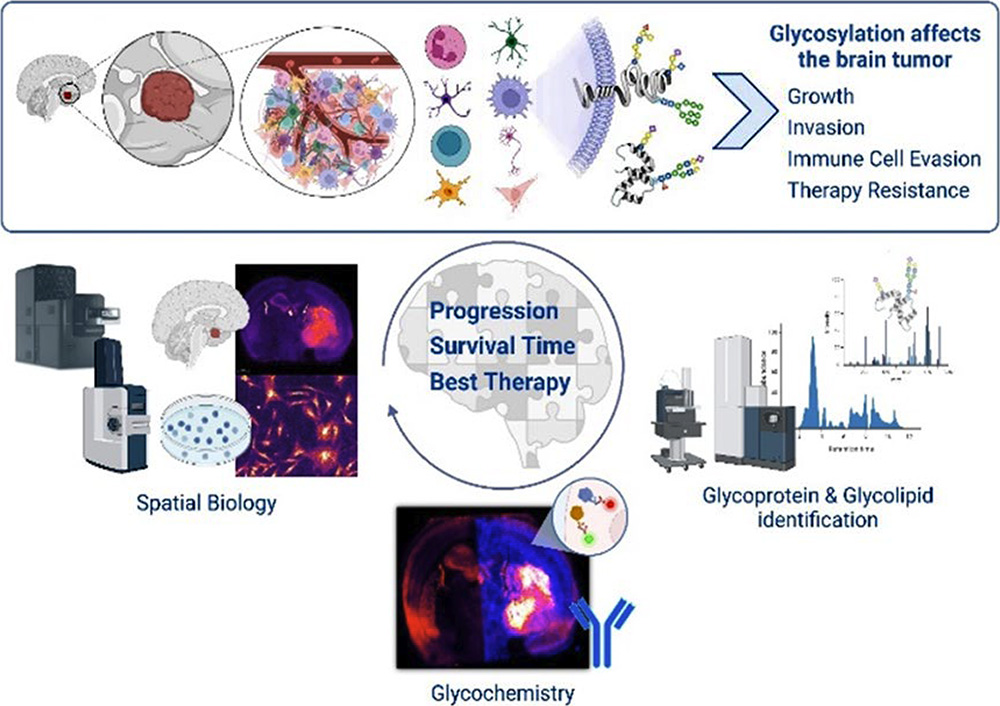
Figure U2: Brain tumors comprise a very specific and heterogeneous cellular microenvironment. (top) Glycosylation of cellular membrane proteins and lipids plays a crucial role in tumor growth, invasion, immune cell evasion, and therapy resistance. BioBeyond_NL enables researchers to identify glycoproteins and glycolipids in brain tumors (UU, right), synthesize tumor-specific glycans for staining (UU, bottom), then spatially visualize the cellular composition and glycosylation in the brain tumor microenviroment (UM, left). This complementary research strategy provided by BioBeyond_NL provides crucial insights regarding tumor progression and patient survival times to develop better, and perhaps personalized, therapies.
News and events